
Ramadan in Kuwait: What Tourists and Expats Need to Know
 By Axel Donovan
Ramadan is one of the most significant periods of the Islamic calendar, and the observance of Ramadan in the Gulf offers a visitor a special insight into the culture and religion of the local population, besides the way they live their daily lives. The Kuwaiti celebration of Ramadan is done with much respect and great attachment to the family, and such a form of change of practice seems to have taken place in the country. As a tourist and a foreigner, he or she must be aware of how the sacred month is going to affect the life of the people, the tours, and the visa to visit the country in a comfortable and dignified way.
This guideline is aimed at assisting the visitors, first-time travelers, and expats with the knowledge of what to expect in Kuwait during Ramadan, from daily customs to dining options and visa planning.
 Ramadan in Kuwait
- What Is Ramadan and Why It Matters in Kuwait
- Date of Ramadan and How It Is Determined
- Daily Life During Ramadan in Kuwait
- Rules and Etiquette for Tourists
- Eating, Dining, and Alcohol Laws
- Iftar and Suhoor: Experiencing Local Culture
- Shopping, Entertainment, and Nightlife
- Transportation and Travel Considerations
- Is Ramadan a Good Time to Visit Kuwait?
- Ramadan and Kuwait Visa Applications
- Tips for Expats Living in Kuwait During Ramadan
- Frequently Asked Questions
- Final Thoughts: Visiting Kuwait During Ramadan
What Is Ramadan and Why It Matters in Kuwait
The ninth month of the Islamic lunar calendar is Ramadan, and it honors the revelation of the Quran. Kuwait is a Muslim-majority country, and Ramadan is not only a religious observance but also a major social and cultural period. Ramadan in Kuwait is focused on charity, self-control, prayer, and community integration, which forms the pace of the whole country.
In this month, Muslims fast from dawn until sunset, abstaining from food, drink, and smoking. The day-to-day life, even of non-Muslims, is adjusted to the sacredness of the season.
Date of Ramadan and How It Is Determined
In Kuwait, Ramadan begins on another day annually because of the lunar calendar, which begins on sighting the crescent moon. As a result, Ramadan changes 10-11 days annually based on the Gregorian calendar. The authorities formally declare the start date a few days before the onset of the month, and this can slightly affect travel and administrative preparations.
When booking flights or applying to receive a visa, visitors must never finalize the travel dates without first verifying the official announcements.
Daily Life During Ramadan in Kuwait
Fasting and Public Conduct
A typical day of Ramadan in Kuwait starts earlier than the sun comes out with Suhoor (the pre-dawn meal) and concludes with the setting of the sun with Iftar. Eating, drinking, or smoking in public during daylight hours is prohibited for both Muslims and non-Muslims. Most restaurants close their main dining areas during the day, though hotels and some venues may offer discreet indoor service for non-fasting guests.
Working Hours and Services
The government offices and banks, as well as most of the businesses, work on shortened hours. The same applies to the services that deal with immigration, and hence, it is important to pre-plan the visa applications. While essential services remain available, processing times may be slower due to reduced working hours.
Rules and Etiquette for Tourists
Tourists are not supposed to dress in a dirty manner, nor should they act indecently. Tourists need not fast, but it must be unobtrusive. No loud music, no display of affection, and no immodest dress. When it comes to women, during Ramadan, modest clothing is encouraged, such as loose-fitting garments that cover shoulders and knees, elegant garments that cover both shoulders and knees, and travelers can wear similar designs to fit in more decently.
Photography should be done carefully, especially near mosques or during prayer times.
Eating, Dining, and Alcohol Laws
One common concern among visitors is whether they can eat during the day. Hotels are inclined to provide secluded areas to non-fasting people, and there is an opportunity for delivery services to perform in the shadows. It is that after the night falls, entire restaurants, family meetings, and traditional Ramadan tents dominate Kuwait.
Alcohol is prohibited year-round in Kuwait, not just during Ramadan, and travelers should be aware of strict enforcement.
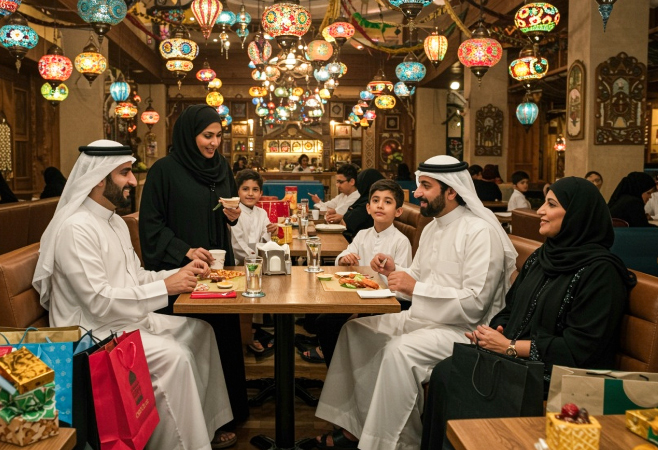 Kuwaiti families in Dining
Iftar and Suhoor: Experiencing Local Culture
Iftar is a Kuwaiti Ramadan food that is celebrated by the family and other community members to break their fast. The majority of the hotels and restaurants are accompanied by special Iftar buffets, which contain traditional foods like dates, soups, rice, and sweets. The Suhoor party usually goes late into the night, particularly in cafes and residential houses.
For tourists, participating in Iftar is a unique cultural experience and an excellent way to understand Kuwaiti hospitality.
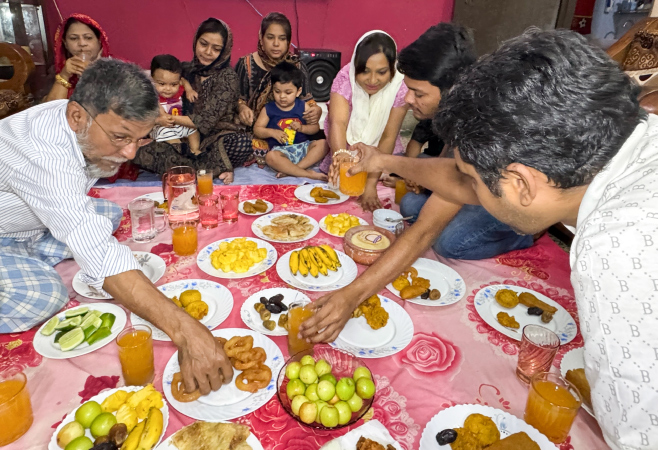 Participating in the Iftar of travelers
Shopping, Entertainment, and Nightlife
The shopping malls are also active late at night and are mostly open late in the day. Ramadan markets, charity events, and cultural events are common. Entertainment transforms into family entertainment and religious entertainment, and proposes to the visitors a natural and relaxed setting.
Despite quieter daytime hours, Ramadan in Kuwait is surprisingly vibrant after sunset
Transportation and Travel Considerations
During Ramadan, the traffic pattern is altered, and congestion is experienced just before Iftar when people are on the way home. There is still public transportation, but the schedules can be changed. The Kuwait international airport is functioning well, but passengers are encouraged to arrive at the airport early enough so that they can account for the delays that might occur.
Is Ramadan a Good Time to Visit Kuwait?
Visiting during ramadan in kuwait has both advantages and challenges.
- Pros include fewer crowds during the day, a unique cultural experience, and memorable evening activities.
- Cons include limited daytime dining options, adjusted business hours, and slower administrative processes.
For culturally curious travelers and respectful visitors, Ramadan can be one of the most rewarding times to explore Kuwait.
Ramadan and Kuwait Visa Applications
Many travelers ask whether they can apply for a visa during Ramadan. The answer is yes, but processing times may be slightly longer due to reduced working hours. The best method of applying is using the online services of the Kuwait Immigration Services, and this is highly efficient during Ramadan. The fact that their application system of eVisa is streamlined enables the traveler to submit documents, monitor progress. his can be especially helpful during Ramadan, when government offices operate on reduced schedules.
Planning ahead is strongly recommended if your travel dates fall within ramadan in kuwait.
Tips for Expats Living in Kuwait During Ramadan
A more relaxed working schedule, increased social invitations, and a slower daytime rhythm should be expected by the expats. Non-Muslims who opt to fast do so in solidarity, though this is not mandatory. Respecting colleagues’ routines and accepting Iftar invitations are great ways to integrate socially.
Understanding local customs also makes expats avoid professional and social hassles during Ramadan in Kuwait.
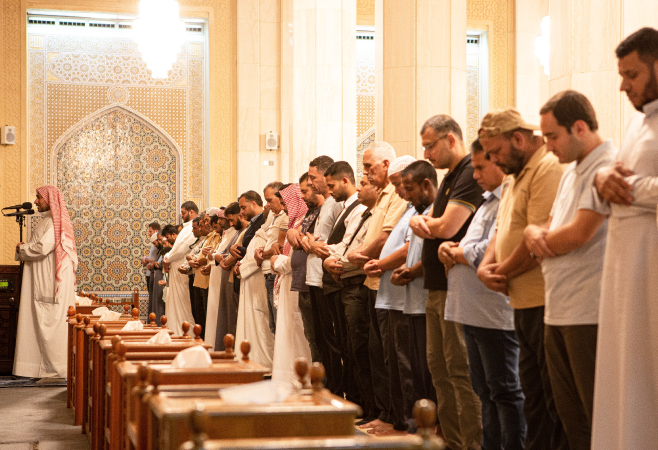 Muslim worshipers perform one of the five daily prayers at Kuwait's official Mosque.
Frequently Asked Questions
Is Ramadan a public holiday in Kuwait?
Ramadan itself is not a holiday, but working hours are reduced, and Eid celebrations at the end of the month are public holidays.
Are tourist attractions open?
Most attractions remain open, though schedules may change.
Is Kuwait safe during Ramadan?
Yes. Kuwait remains safe and welcoming, provided visitors follow local laws and customs.
Final Thoughts: Visiting Kuwait During Ramadan
Whether you are visiting for tourism, business, or a family trip, Ramadan in Kuwait is a great cultural experience, as no other time of the year can be.
Through understanding local traditions, scheduling events around sunset, and obtaining your visa prior to arrival in Kuwait through the Kuwait Immigration Services, tourists can experience a dignified, hassle-free, and fulfilling visit. Even strangers to the region may end up being surprised by the warmth, generosity, and ambiance of Ramadan in Kuwait to the point that it is a permanent experience.
For a hassle-free entry, travelers are encouraged to apply for their Kuwait eVisa online before arrival, especially during Ramadan, when preparation makes all the difference.
Related Articles
- Interesting Facts About Kuwait You Should Know Before Visiting
- Photography Spots in Kuwait – Top Places for Stunning Photos
- Yacht Trip in Kuwait – A Luxury Experience on the Arabian Gulf
- Camping in Kuwait Desert – The Ultimate Guide to a Desert Adventure
- Camel Riding in Kuwait – A Complete Desert Experience Guide
- Fine Dining in Kuwait – A Guide to Luxury Culinary Experiences
- Autumn in Kuwait – Weather, Places to Visit, and Travel Tips
- Winter in Kuwait – Weather, Best Places to Visit, and Travel Tips
- Kuwait Summer – Weather, Travel Tips, and Things to Do
- Spring in Kuwait – Weather, Best Places to Visit, and Travel Tips

HOW CAN WE HELP?
 NEED HELP 24/7
 United States
+1 949 346 9868
United States
+1 949 346 9868
 United Kingdom
+44 0330 822 7696
United Kingdom
+44 0330 822 7696
 Singapore
+65 6485 3630
Singapore
+65 6485 3630
 Viber
+65 8174 8526
Viber
+65 8174 8526

APPLY WITH CONFIDENCE


|


