
Eid al-Adha in Kuwait: Traditions, Public Holidays, and Travel Tips
 By Axel Donovan
Eid al-Adha is an important religious event in the Islamic calendar, and its celebration is filled with a sense of religious devotion, strong family bonds, charity, and nationwide state holidays. Eid al-Adha in Kuwait is punctuated with religious devotion, solid family connections, charity, and nationwide holidays. To tourists, expatriates, and business travelers, it is necessary to know how this festival will impact their daily life, traveling arrangements, and visa arrangements so that they can move around without any hassle.
This guide covers the celebration of Eid al-Adha in Kuwait, what to expect as a tourist, and how to plan their travel and visa application during the time of the celebration.
 Eid al-Adha in Kuwait
- What Is Eid al-Adha and Why It Is Important in Kuwait
- When Is Eid al-Adha in Kuwait?
- How Eid al-Adha Is Celebrated in Kuwait
- Food and Traditional Meals During Eid al-Adha
- What Tourists Should Expect During Eid al-Adha
- Business Hours, Public Services, and Closures
- Shopping, Entertainment, and Public Events
- Transportation and Travel During Eid al-Adha
- Visiting Kuwait During Eid al-Adha: Pros and Cons
- Eid al-Adha and Kuwait Visa Applications
- Cultural Etiquette for Tourists During Eid al-Adha
- Tips for Expats Living in Kuwait During Eid al-Adha
- Conclusion: Experiencing Eid al-Adha in Kuwait as a Visitor
What Is Eid al-Adha and Why It Is Important in Kuwait
Eid al-Adha, commonly known as the Festival of Sacrifice, is a celebration of how Prophet Ibrahim, the father of myriads of Muslim faithful, was ready to sacrifice his son to please God. Eid al Adha is based on faith, obedience, generosity, and compassion, which are the values that are fundamental in Kuwaiti society.
Eid al-Adha is a major religious occasion and an official public holiday in Kuwait, marked by nationwide observance and government-announced closures, not only in Kuwait, as it is a period of charity, hospitality, and community service; therefore, it is one of the most socially important days of the year.
When Is Eid al-Adha in Kuwait?
Eid al-Adha is observed on the Islamic calendar, and it is observed on the 10th of Dhu al-Hijjah. The Gregorian calendar has a different date every year since it is calculated with the help of sighting the moon. In Kuwait, the number of public holidays usually ranges from three to four days, depending on official government announcements and how the dates align with weekends.
During Eid al-Adha in Kuwait, it is important that travelers keep track of official updates way ahead of time since the Eid dates influence flights, hotel availability, and other services offered by the population.
How Eid al-Adha Is Celebrated in Kuwait
Eid Prayers and Religious Observance
The opening day of Eid starts with special morning prayers at mosques and open prayer grounds throughout the country. Authorities inform the time of Eid al-Adha prayer in Kuwait, which is normally just after sunrise. There are large crowds in a very peaceful and respectful environment.
The prayers are then succeeded by the greetings, family visits, and social celebrations, which determine the atmosphere of Eid al-Adha in Kuwait.
Animal Sacrifice and Charity
A central ritual of Eid al-Adha is Qurbani (animal sacrifice). In Kuwait, animal sacrifice is strictly regulated and usually carried out at licensed slaughterhouses or through approved charitable organizations to ensure hygiene, safety, and compliance with regulations. The meat is customarily shared into portions that serve family, friends, and the needy. This act of sharing highlights the charitable spirit of Eid al-Adha in Kuwait and reinforces social solidarity.
Food and Traditional Meals During Eid al-Adha
Eid celebrations include a significant portion of food. Families serve huge amounts of food comprising rice, Lamb, grilled meats, and traditional Kuwaiti foods. Sweets, Arabic coffee, and festive meals are served by many households during the day during eid ul adha Kuwait, where they have guests.
Hotels and restaurants also come with a special Eid menu, providing the tourists with the opportunity to sample local cuisine in a festive atmosphere when enjoying Eid al Adha in Kuwait.
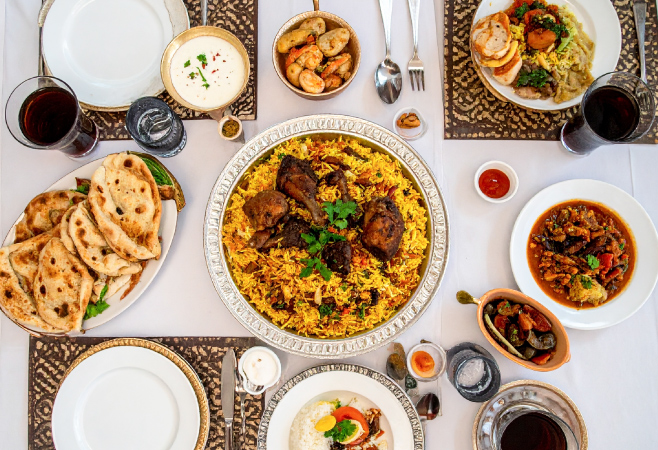 Traditional Eid meals in Kuwait often include lamb-based dishes such as machboos, quzi, and harees, alongside sweets, dates, and Arabic coffee. In multicultural households, South Asian dishes may also be served.
What Tourists Should Expect During Eid al-Adha
The visitors coming during the Eid al-Adha in Kuwait will find a family-friendly atmosphere. Residential areas and streets are very active with social visits, but the commercial activity tends to be quieter during the daytime, while evenings and nights become lively, especially in shopping malls, cafés, and family entertainment venues. Evenings are more active, particularly in the shopping centers and the entertainment centers.
Tourists should be prepared for cultural sensitivity, modest dress expectations, and changes in daily routines during Eid al-Adha in kuwait.
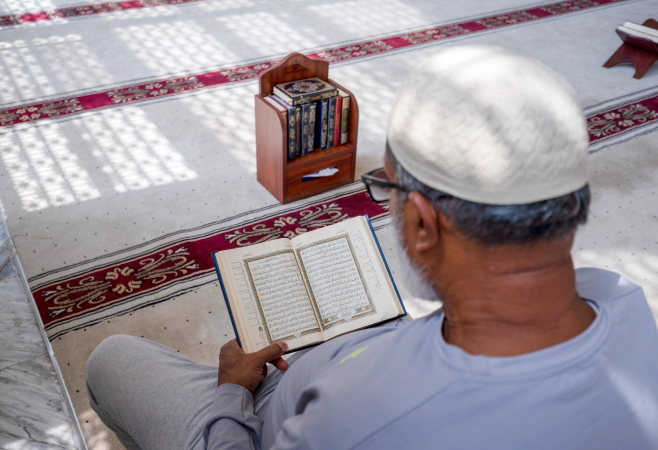 An old man sits quietly inside a mosque, reading the Quran
Business Hours, Public Services, and Closures
Government offices, banks, and many administrative services close during the official eid al adha holidays in kuwait. This includes immigration-related offices and some embassy services. While essential services remain available, processing times for paperwork may be slower.
Private businesses, supermarkets, and malls usually reopen quickly, often with extended evening hours to accommodate holiday shoppers during eeid al adha in kuwait.
Shopping, Entertainment, and Public Events
Eid al-Adha is a shopping season in Kuwait. Shopkeepers provide shoppers with a discount, and shopping malls have events and programs that are family-friendly. Although compared to Eid al-Fitr, Eid al-Adha tends to be more subdued, people can still have cultural experiences and spend their free time in the cafes and restaurants.
The experiences enable the travelers to experience a more traditional and reflective face of Eid al-Adha in Kuwait but centered on a family over a big public celebration.
Transportation and Travel During Eid al-Adha
There exists congestion of traffic, particularly during the peak visiting seasons. Public transportation remains in operation yet it may have holiday schedules. The Kuwait International Airport is fully operational but the passenger traffic is usually high with residents traveling internationally or coming back.
Planning airport transfers and city travel in advance is strongly recommended during Eid.
Visiting Kuwait During Eid al-Adha: Pros and Cons
Pros
- Authentic cultural and religious experience
- Strong sense of community and hospitality
- Opportunity to observe important Islamic traditions
Cons
- Government office closures
- Slower administrative processes
- Increased traffic during peak hours
For culturally curious travelers, visiting Kuwait during Eid al-Adha can be deeply meaningful when planned correctly.
Eid al-Adha and Kuwait Visa Applications
Travelers often ask whether visa applications can be processed during Eid al-Adha.Visa applications can still be submitted during Eid al-Adha; however, processing times may be longer due to public holidays and reduced staffing. Travelers should apply in advance using Kuwait Immigration Services so that they do not inconvenience them.
Kuwait Immigration Services has the advantage of a simplified online eVisa application system, which enables travelers to pass documentation, monitor the status of the application, and minimize delays. Early application can be of great essence, particularly in cases of travelling during major holidays such as Eid al-Adha, as there would be ease in the entry process.
Cultural Etiquette for Tourists During Eid al-Adha
Tourists should dress modestly, avoid loud or inappropriate behavior, and respect prayer times. Simple greetings such as “Eid Mubarak” are appreciated. Photography should be done respectfully, particularly around mosques and family gatherings.
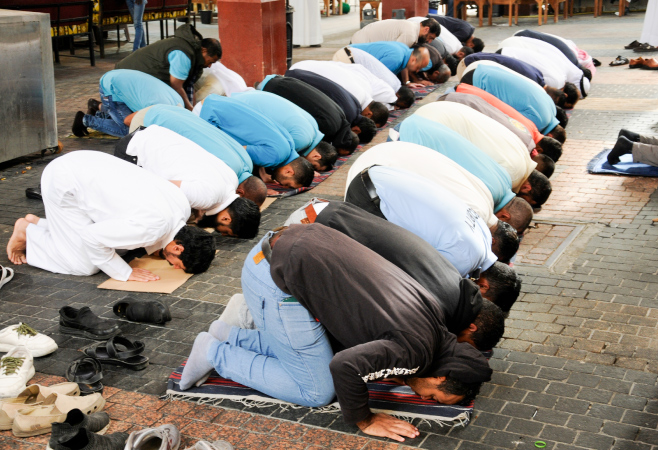 Noon prayer of Muslims in the oldest and largest souk of Kuwait
Tips for Expats Living in Kuwait During Eid al-Adha
Expats are to observe longer probation days, social life with family, and fewer brisk business activities. Engaging in charitable activities and observing local traditions ensures that relationships within the community are improved during Eid.
Conclusion: Experiencing Eid al-Adha in Kuwait as a Visitor
Eid al-Adha is a religious, generous, and introspective festival in Kuwait. Travelers who know local practices and keep in mind the trips will find it fulfilling whether going to enjoy the country, business, or family. When the visitor applies for a visa early via Kuwait Immigration Services and keeps preparations for the holiday in mind, it will be a respectful and enriching trip during one of the major religious celebrations in Kuwait.
Related Articles
- Interesting Facts About Kuwait You Should Know Before Visiting
- Photography Spots in Kuwait – Top Places for Stunning Photos
- Yacht Trip in Kuwait – A Luxury Experience on the Arabian Gulf
- Camping in Kuwait Desert – The Ultimate Guide to a Desert Adventure
- Camel Riding in Kuwait – A Complete Desert Experience Guide
- Fine Dining in Kuwait – A Guide to Luxury Culinary Experiences
- Autumn in Kuwait – Weather, Places to Visit, and Travel Tips
- Winter in Kuwait – Weather, Best Places to Visit, and Travel Tips
- Kuwait Summer – Weather, Travel Tips, and Things to Do
- Spring in Kuwait – Weather, Best Places to Visit, and Travel Tips

HOW CAN WE HELP?
 NEED HELP 24/7
 United States
+1 949 346 9868
United States
+1 949 346 9868
 United Kingdom
+44 0330 822 7696
United Kingdom
+44 0330 822 7696
 Singapore
+65 6485 3630
Singapore
+65 6485 3630
 Viber
+65 8174 8526
Viber
+65 8174 8526

APPLY WITH CONFIDENCE


|


